

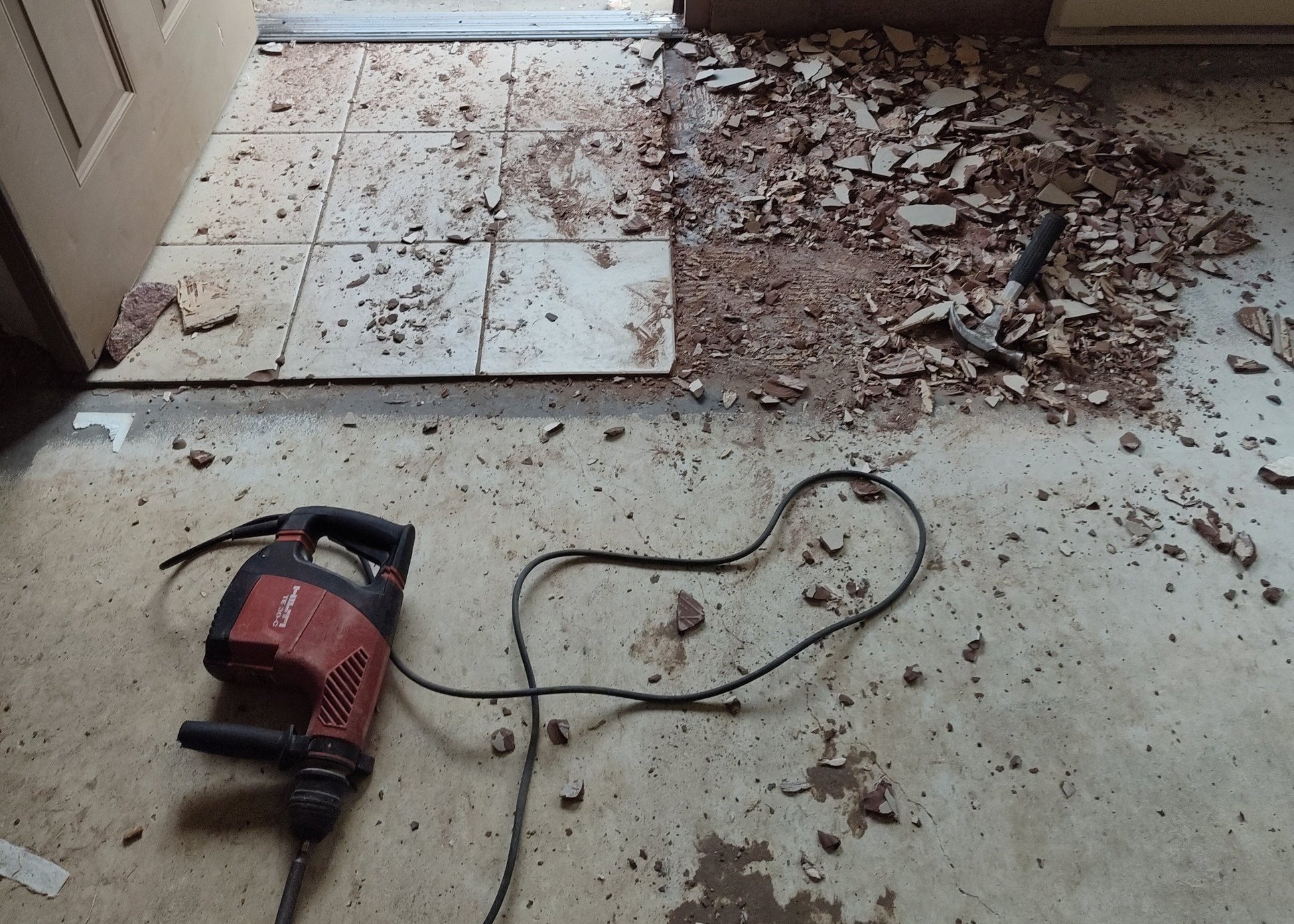
Removing ceramic tile is one of the most intensive parts of a flooring project. If you're replacing tile, here's what to expect, how to prepare your home, and what should be done to protect your property and your family.
The tile removal process
Unlike carpet or laminate, ceramic tile is bonded directly to a concrete slab or cement backer board with thinset mortar. Breaking that bond takes significant force and specialized equipment. The work involves:
Assessing the existing floor and what's underneath it
Removing baseboards and transition strips, if needed
Chipping or grinding out tile and mortar with jackhammers, rotary hammers or floor scrapers
Removing debris and cleaning the surface underneath
Inspecting the subfloor for damage, moisture or leveling issues
Preparing the surface for your new flooring
At Carpetime, tile removal typically runs $7.50 to $15.00 per square foot, including grinding off the thinset, confirmed after a site walk.
Dust and air quality
Ceramic tile and thinset mortar contain silica. When they're broken up, fine silica dust gets into the air. Breathing silica dust over time is a serious health hazard and can cause a lung disease called silicosis.
Installers should use vacuum-attached tools, HEPA-filtered vacuums and wet methods for leftover adhesive to keep airborne dust to a minimum. Even so, some dust during tile removal can't be avoided. Here's what you can do:
Stay out of the work area, and ideally off that entire floor of the house, while tile is being removed.
Keep children and pets well away from the work area at all times.
If anyone in your home has asthma, COPD or another breathing condition, talk with your doctor before staying in the home during the work.
Seal HVAC vents in the work area with plastic sheeting and tape so dust doesn't spread through your heating and cooling system.
After each workday, air out the space with open windows and fans if the weather allows.
Noise and vibration
Tile removal is loud. Jackhammers, chipping hammers and grinders create noise and vibration you'll feel throughout the house, especially on the same floor as the work. Noise near the work area during chipping can reach 85 to 100 decibels, and vibration can make items on shelves and walls shift or fall, so please move fragile items near the work area ahead of time.
Work should happen during weekday business hours, in line with local noise rules. If you work from home or have young children who nap during the day, let your contractor know. The loudest work can often be scheduled around your needs.
How your home should be protected
Dust plan and sign-off: before work starts, agree on a dust plan with your contractor, such as turning off heating and air and masking doorways, and sign off on the tear-out process.
Plastic sheeting barriers: doorways and openings next to the work area should be sealed with heavy plastic sheeting to contain dust.
Floor protection: nearby flooring, such as hardwood or carpet, should be covered with protective film or cardboard before work starts.
Debris containment: broken tile and mortar should go straight into covered containers or bags, so less gets tracked through the house.
Daily cleanup: the work area should be swept, HEPA-vacuumed and cleaned at the end of each workday.
Furniture and belongings: furniture and belongings in the work area should be removed or covered before work begins.
What we might find underneath
Once the tile is up, the subfloor can reveal problems that weren't visible before. A good contractor looks for warning signs at the estimate, but some conditions only show up after the tile is removed. Common ones include:
A cracked or damaged concrete slab that needs patching or leveling
Moisture damage, mold or mildew in or around the subfloor
Uneven areas that need grinding or self-leveler before new flooring goes down
Leftover thinset mortar that's hard to remove cleanly
Older adhesives or materials that may contain asbestos
If any of these turn up, work should stop, and your contractor should document what was found and contact you before going further. Depending on what's needed, it may add cost or time.
Asbestos awareness
Homes built before 1980 may have asbestos in floor tiles, adhesives or underlayment. Asbestos materials in good condition that are left alone generally aren't a risk, but disturbing them during removal can release fibers into the air and create a serious health hazard.
If your home was built before 1980, we strongly recommend having the existing flooring tested for asbestos by a certified inspector before removal begins. If asbestos is found, it must be removed by a licensed abatement contractor following federal and state rules. Your flooring contractor can often share names of certified professionals in the area.
How you can help before work starts
Clear the work area of all furniture, rugs and personal belongings.
Take down or secure fragile wall hangings, artwork and shelf items nearby.
Make sure the work area is easy to get to, with a clear path out for debris.
Plan for children and pets to be out of the home during active work.
Tell your contractor about any known water damage, past repairs or other concerns with the floor.
Make sure the electricity and water the crew will need are accessible.
How long it takes
It depends on the size of the area, the type and thickness of the tile, and what's underneath. As a general guide:
Under 100 sq ft: about 1 day
100 to 500 sq ft: 1 to 3 days
500+ sq ft: 3 to 5+ days, depending on complexity
Your written estimate should include the expected timeline for your project. Unexpected subfloor conditions, weather or material delays can change the schedule, and you should be told right away if that happens.
After the tile is out
Once the tile and mortar are removed and the subfloor is prepared, your contractor should walk through the area with you before installing your new floor, show you the condition of the subfloor and anything that was found, confirm next steps, and answer any questions about materials, timing or care.
Questions at any point? Call Carpetime at 970-245-4753 or stop by 2920 I-70 Business Loop, Grand Junction. Carpetime has been family owned since 1975.
This post was written with the help of AI tools.


